


The Globetrotter’s Guide to Summer Cashmere: Travel Light, Protect Your Investment
< Back to Journal
The transition from a pressurised, "Arctic" airplane cabin to a humid, tropical sunset presents a unique wardrobe challenge. Travellers often find that standard cotton fails in these extremes, leaving them either chilled by recycled air or stifled by moisture-heavy fabric that refuses to dry. A 6oz fine-gauge cashmere sweater offers a sophisticated solution to this dilemma. Often referred to as "summer cashmere," this lightweight layer provides a natural thermostat for the body. It ensures comfort across vastly different climates without adding unnecessary bulk to a carry-on.
Caring for what you love begins with understanding the materials you choose. At Hayden Hill, we believe that the objects you invest in should work as beautifully as they look. When you choose a high-quality knit for your journey, you are choosing a garment that supports longevity and craftsmanship. This blog explores why cashmere remains the superior choice for summer travel and how to maintain its integrity through thoughtful systems of care.
The Fibre Science: Why Goat Hair Breathes Better
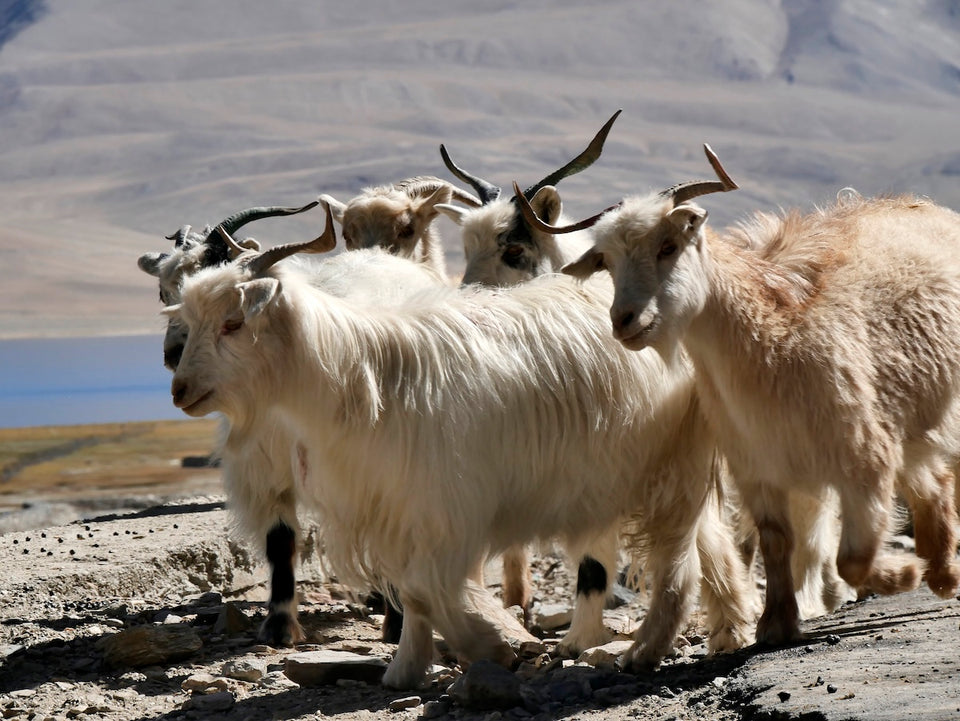
Cashmere fibers possess unique structural properties that make them superior to plant-based textiles for international travel. Animal fibres are naturally hygroscopic, meaning the fibres can absorb large amounts of moisture vapour and release it into the atmosphere. This process prevents the "clammy" feeling often associated with synthetic materials or heavy cotton.
The technical advantages of cashmere include:
-
Natural Insulation: Hollow fibres trap air to provide lightweight insulation against cabin chill.
-
Temperature Regulation: Fine-gauge knits allow heat to escape when the ambient temperature rises.
-
Odour Resistance: Natural proteins in the fibre resist the growth of odour-causing bacteria.
-
Moisture Management: The fibre can absorb up to 30 per cent of its weight in moisture without feeling damp.
Unlike cotton, which holds onto moisture and can feel heavy against the skin in humid environments, cashmere allows for constant air circulation. The natural crimp of the cashmere fibre creates small air pockets that act as a buffer against both heat and cold. This makes a light weight knit the perfect choice for the fluctuating temperatures of modern transit. While cotton fibres are solid and can become saturated, the hollow nature of cashmere ensures a dry, breathable experience.
The Summer Cashmere Trend: Beyond the Winter Wardrobe
There is a growing conversation among textile enthusiasts and frequent travellers regarding the utility of wool in warmer months. While traditional logic suggests that wool is exclusively for winter, many are discovering that a fine-gauge knit is more breathable than a heavy linen or a dense cotton tee. This "sanity saver" is particularly valuable for those moving between air-conditioned offices and outdoor humidity.
Common questions often arise regarding whether wearing wool in summer causes overheating. The reality is that the quality of the yarn and the weight of the knit dictate the comfort level. A summer weight sweater is specifically designed to be feather-light. In high humidity, the ability of the fibre to wick moisture away from the skin is far more effective than plant-based fibres that tend to stick when wet.
In summer, the environment presents two primary threats to cashmere: high humidity and increased pest activity. Humidity can cause fibres to lose their shape if not stored correctly, while the warmth of the season marks the peak period for clothes moths. Utilising a thoughtful system of care ensures that your investment remains pristine even when the temperature climbs.
The Packing Hack: The Bundle Wrap Method
Packing delicate knits requires a strategy that minimises friction and avoids sharp folds. The "Bundle Wrap" method is a highly effective way to ensure a zero-wrinkle arrival. Instead of folding garments into individual squares, which can create permanent creases in the knit, you wrap your clothing around a central "core."
To execute this method:
-
Place a soft item, such as a laundry bag or a padded pouch, in the centre of your packing area.
-
Lay your cashmere sweater flat on a clean surface.
-
Wrap the garment gently around the central core.
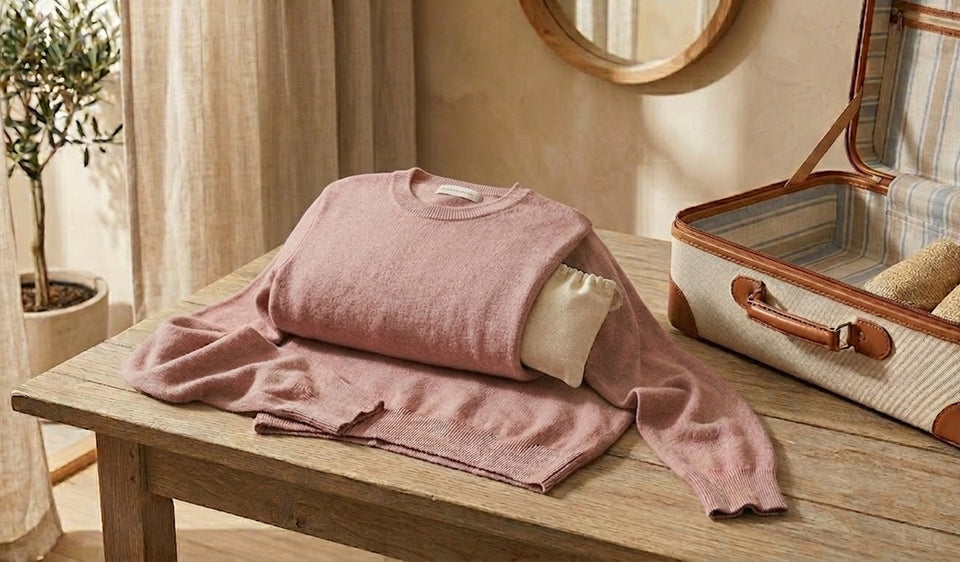
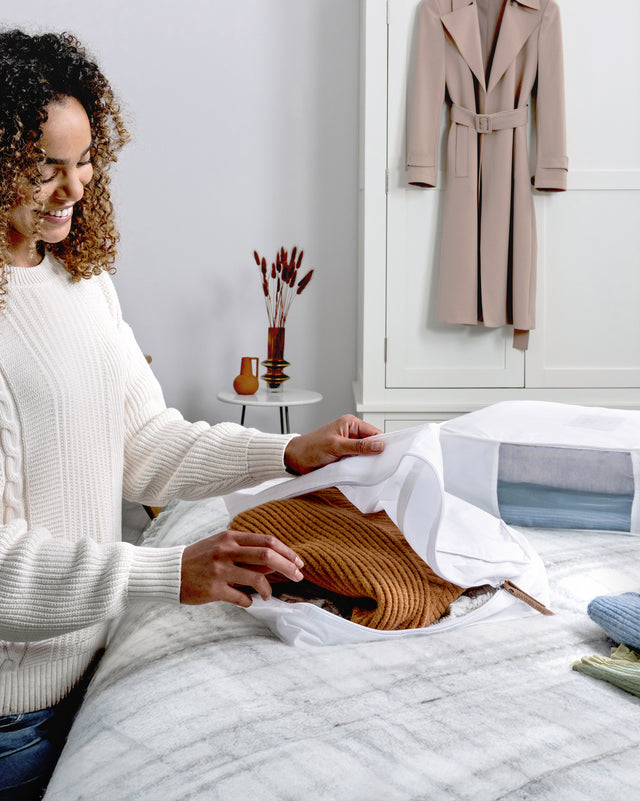
This tension-based system prevents the fabric from shifting and folding during transit. By avoiding sharp edges, you preserve the integrity of the knit and eliminate the need for an iron upon arrival. We recommend keeping the sweater inside an organic cotton bag during this process to further reduce friction against other items in your luggage. Proper tension prevents the fibres from stretching or becoming distorted during the journey.
Protection on the Go: The Risk of Hotel Drawers
Standard hotel furniture often poses a hidden threat to fine fabrics. Wooden drawers can harbour residues from cleaning chemicals, old wood stains, or even pests like clothes moths. To safeguard your investment, you should avoid placing cashmere directly into hotel drawers.
Maintaining a clean environment is essential for garment preservation:
-
Breathable storage: Organic cotton bags protect fibres from dust while allowing air to move.
-
Pest prevention: Sealed storage provides a physical barrier against moths.
-
Contaminant buffer: Cotton prevents contact with unexpected residues in aged furniture.
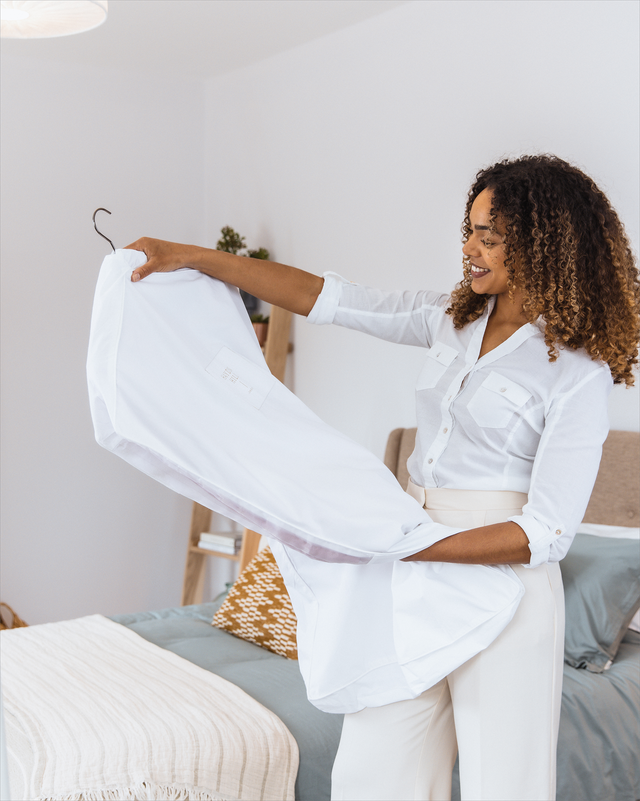
Instead of unpacking into the furniture, keep your sweaters inside their organic cotton garment bags. These bags act as a portable closet. They provide a clean environment that honours the quality of the fibre while allowing it to breathe naturally. Frequent travellers often note that hotel environments are rarely as clean as they appear; a protective layer is a simple but necessary habit for preservation.
The Emergency Refresh: Hotel Sink Care
If a spill occurs during your travels, prompt action is required to prevent a permanent stain. You can safely clean cashmere in a hotel sink if you follow a precise routine. We recommend using cool water and a small amount of gentle soap.
-
Submerge and Soak: Submerge the garment and gently squeeze the soapy water through the fibres.
-
Avoid Friction: Never wring or scrub the material, as this causes pilling and permanent distortion of the knit.
-
The Towel Press: After rinsing, lay the sweater flat on a clean hotel towel. Roll the towel up like a sleeping bag to absorb excess moisture.
-
Dry Flat: Unroll the towel and let the garment dry flat on a horizontal surface away from direct heat or sunlight
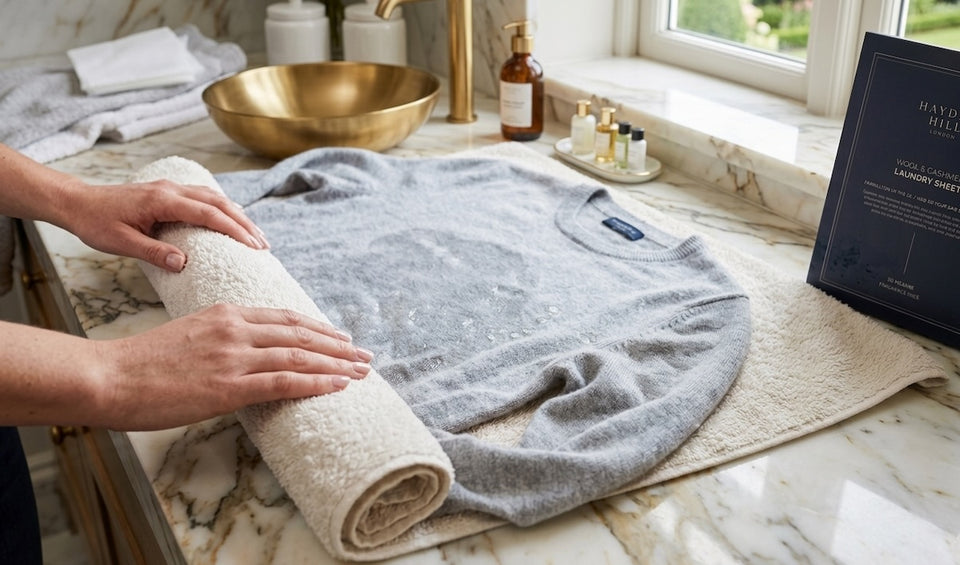
Prompt maintenance prevents the "setting" of stains and ensures the garment is ready for your next destination. Drying flat is critical because hanging a wet knit will cause the weight of the water to stretch the shoulders and ruin the silhouette.
Strategic Selection for Stress-Free Travel
When selecting a piece for your journey, consider a darker neutral such as Navy or Charcoal. Darker tones effectively hide "plane grime" and minor splashes significantly better than cream or beige. This choice reduces the pressure of finding a high-end dry cleaner in an unfamiliar city, ensuring your wardrobe remains presentable for the duration of your trip.
Furthermore, a darker knit transitions seamlessly from a daytime travel layer to a sophisticated evening wrap. This versatility is the hallmark of a thoughtful travel wardrobe. It allows you to carry less while maintaining a high standard of appearance. Travellers often find that a single dark cashmere piece can replace three or four heavier, less versatile items.
Managing Humidity and Odors
Humidity is a primary concern for those wearing cashmere in tropical or coastal regions. High moisture levels in the air can make fibers feel heavy. However, the natural protein structure of cashmere allows it to shed moisture more efficiently than synthetic alternatives. To manage humidity, ensure the garment is aired out after wearing.
You may find that your sweater begins to hold a slight travel scent. Hanging it on a padded hanger, or over an airer so it is flat, in a well-ventilated area, and away from direct sunlight, can naturally refresh the fibres. The self-cleaning properties of animal fibres mean they require less frequent washing than cotton or polyester. This longevity of wear between washes is a significant advantage for long-haul trips where laundry facilities may be limited.
Frequently Asked Questions
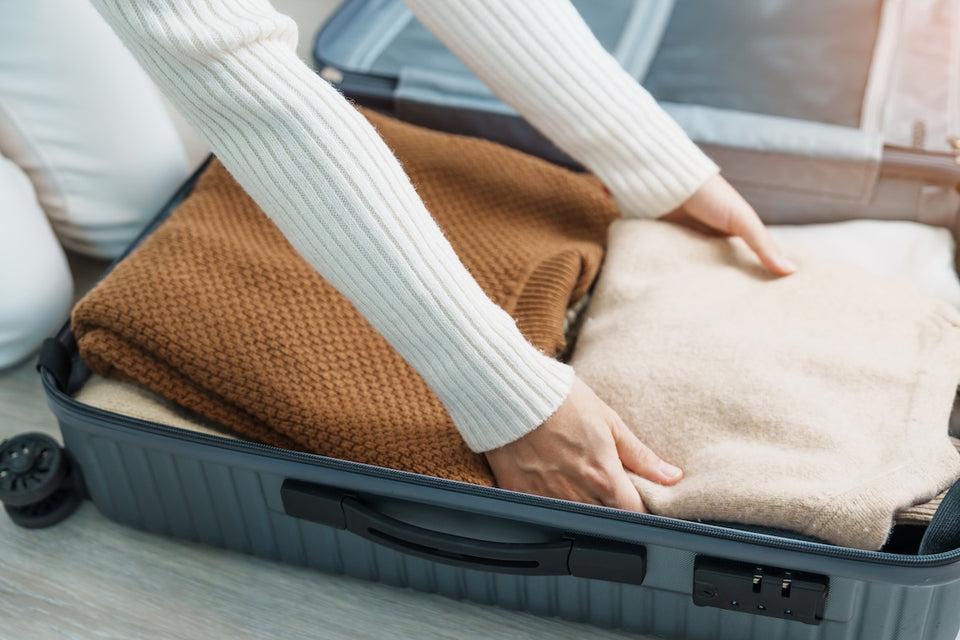
How should cashmere be packed for travel?
Cashmere should be packed using the bundle wrap method to avoid creases. Wrapping the garment around a soft central core prevents sharp folds and maintains the natural shape of the knit.
Why is cashmere better than cotton for summer travel?
Cashmere fibres are more breathable and offer superior temperature regulation compared to cotton. The hollow structure of the goat hair provides natural insulation that adapts to both cold airplane cabins and warm outdoor environments.
Can I wash cashmere in a hotel sink?
Yes, cashmere can be washed in a hotel sink using cool water and gentle soap. It is essential to dry the garment flat on a towel to prevent stretching or the loss of its original shape.
How do I protect my clothes from moths while traveling?
To protect clothes from moths while traveling, store garments in breathable organic cotton bags. These bags provide a physical barrier against pests while allowing the necessary air circulation for the fibres to remain fresh.
Is it safe to store cashmere in hotel drawers?
It is generally not recommended to store fine knits directly in hotel drawers. Wooden surfaces may contain residues or pests. Using an organic cotton garment bag as a buffer is a safer and more hygienic alternative.
How often should cashmere be washed when traveling? Cashmere should be washed as infrequently as possible. Because the fibres resist odours naturally, you can often wear a sweater multiple times by simply airing it out between uses. Wash only when visible stains or persistent odours occur.
A Commitment to Longevity
Caring for what you love does not stop when you leave home. By choosing high-quality, fine-gauge cashmere and utilising thoughtful storage systems, you ensure your wardrobe remains a source of comfort rather than a source of stress. A well-protected sweater is more than just clothing; it is a commitment to longevity and craftsmanship that travels with you.