


Your shoes work hard - heels that carry you through evenings that run late, sneakers that absorb miles and leather boots that earn their wear season after season. But the way you store them when they’re not on your feet determines how long they last - and how good they look when you reach for them again.
Your shoes work hard - heels that carry you through evenings that run late, sneakers that absorb miles and leather boots that earn their wear season after season. But the way you store them when they’re not on your feet determines how long they last - and how good they look when you reach for them again.
Knowing how to store shoes properly isn’t complicated, but it does require a little intention. This guide covers everything from cleaning and shaping to the right environment and the right materials, so every pair stays protected for the long term.
Why Long-Term Shoe Storage Matters
Most shoes degrade in storage long before they wear out in use. Leather dries out and cracks. Glues lose their bond in heat. Moisture breeds mold. Dust and light cause fading. These aren’t dramatic failures - they’re the slow, quiet kind that happen because no one thought about where a pair of shoes was sitting for six months.
The good news is that a few careful habits make a significant difference. Clean, shaped, and stored in breathable conditions, a well-made shoe can last decades.
Step 1: Clean Your Shoes Before You Store Them
This is the most important step, and the one most often skipped. Oils, sweat, dirt, and food particles left on shoes will oxidize over time, causing permanent staining and deteriorating the material from the inside out. If you’re storing shoes for more than a few weeks, they need to be clean first.
Step 2: Maintain the Shape
Shape is everything. Once a shoe loses its structure, it rarely recovers fully. The simplest way to maintain it is to stuff the toe box.
What to Use
Shoe trees are ideal for leather shoes and boots - wooden ones are best because they absorb residual moisture as well as holding the shape. For sneakers and fabric shoes, acid-free tissue paper works well. Roll it loosely and tuck it into the toe without forcing the shape. Avoid newspaper; the ink transfers.
For tall boots, stuff the shaft as well as the toe. A rolled magazine or boot shapers keep the leg upright and prevent creasing at the ankle.
Step 3: Choose the Right Storage Environment
Where you store your shoes matters as much as how you prepare them.
Avoid These Conditions
-
Heat: High temperatures dry out leather, distort synthetic materials, and can melt the adhesives holding a shoe together. Garages and attics are particularly damaging - avoid both for long-term shoe storage.
-
Direct sunlight: UV exposure fades color and degrades materials over time, especially darker uppers and white rubber soles.
-
Humidity: Moisture is the primary cause of mold, and mold can destroy a shoe completely. Never store shoes in damp spaces.
-
Airtight plastic: Plastic containers and bags trap moisture inside, which creates exactly the conditions you’re trying to avoid.
The Ideal Conditions
A cool, dry, dark closet is the ideal environment for long-term shoe storage. Consistent temperature and good airflow matter more than most people realize. If you live somewhere humid, a few silica gel packets placed near your stored shoes will help absorb excess moisture.
Step 4: Use Breathable Protection
Once your shoes are clean, shaped, and in the right environment, the final step is protecting them from dust, light, and contact damage.
This is where the material of your storage solution matters. Plastic bags and airtight bins might seem like the obvious choice for keeping dust out, but they prevent the airflow shoes need. Without circulation, moisture has nowhere to go.
Breathable fabric dust bags are the better option - and the choice that luxury brands use for good reason. Natural materials like organic cotton allow air to move through while protecting against dust, light, and surface scratches. For heels and dress shoes stored on shelves, a dust bag keeps the pair clean without trapping the conditions that cause deterioration.
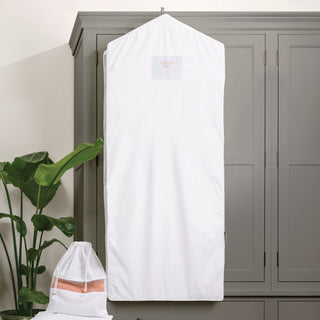
Hayden Hill’s organic cotton dust bags are handmade in small batches from long-staple certified organic cotton, with a sheer organza panel on the front so you can identify what’s inside without opening each one. Available in small, medium, and large, they work for everything from ballet flats and clutches to short boots and tall leather bags. The small size fits a pair of shoes neatly; the medium and large accommodate boots and taller footwear. The small size fits a pair of shoes neatly; the medium and large accommodate boots and taller footwear. Hayden Hill is a British brand designing organic cotton garment and shoe protection products, handmade in small batches in India - each dust bag made with the same care as the item it protects.
How to Store Different Types of Shoes Long-Term
Different shoes, different needs. Here’s a quick reference:
-
Leather shoes and boots: Wipe down with a dry cloth and condition before storing. Use wooden shoe trees to hold the shape and absorb residual moisture. Store in a breathable dust bag in a cool, dark closet, and re-condition every few months.
-
Heels and dress shoes: A soft cloth and a light polish before storing goes a long way. Stuff the toe box to maintain structure. Keep pairs in individual dust bags so heel tips don't scratch adjacent shoes, and store off the floor where possible.
-
Suede and nubuck: Use a suede brush to lift the nap before storing. Keep in a dust bag away from direct sunlight as suede fades faster than most materials.
-
Sneakers: Remove the laces and insoles, clean the uppers, midsoles, and outsoles, and deodorize if needed. Stuff the toe box with acid-free tissue and choose a breathable bag over an airtight container. Take them out every few months to air fully.
-
Satin and embellished shoes: Spot-clean only and allow to dry completely before storing. Wrap in acid-free tissue before placing in a dust bag. Don't stack - pressure is enough to damage delicate embellishments.
-
Flat pumps and mules: These store well in smaller dust bags. The small Hayden Hill dust bag is designed for exactly this - pairs of flat shoes or clutches - keeping them protected without taking up unnecessary space.
How Often Should You Check Stored Shoes?
Long-term storage doesn’t mean forgotten. A quick check every two to three months keeps problems from developing unnoticed. Look for any sign of moisture, mold, or shape loss. Re-stuff if the tissue has flattened. Re-condition leather if it feels dry to the touch.
If you’re storing shoes through a full season - say, sandals through winter or boots through summer - this check-in makes a genuine difference when you return to them.
The Simplest Rule for Long-Term Shoe Storage
Clean before you store. Protect the shape. Let them breathe.
The shoes you take care of are the shoes you still love five years from now. Whether it’s a pair of leather ankle boots worn season after season or a set of heels saved for special occasions, the difference between a shoe that lasts and one that doesn’t often comes down to what happens between wearings.
Good storage isn’t a luxury. For shoes worth keeping, it’s just good sense.
Frequently Asked Questions
Can I store shoes in plastic bags long-term?
Plastic bags and airtight containers trap moisture, which increases the risk of mold and material deterioration. Breathable fabric bags, particularly those made from natural materials like organic cotton, allow airflow while protecting against dust - making them a much better choice for long-term shoe storage.
Should I keep shoes in their original boxes?
Original boxes have value, and sneakerheads often keep them for resale purposes. But cardboard isn’t acid-free, and it breaks down over time. For actual shoe protection, a breathable dust bag is more effective. Keep the original boxes collapsed separately if resale value matters to you.
How do I stop stored shoes from smelling?
Clean them thoroughly before storage - residual sweat and bacteria cause odor over time. A sachet of baking soda or activated charcoal placed inside the shoe (not touching the material directly) will absorb any remaining moisture and keep things fresh during storage.
How do I store boots long-term?
Stuff both the toe and the shaft to maintain shape and prevent creasing at the ankle. Store upright where possible. Use wooden shoe trees or boot shapers in the leg. Keep in a breathable fabric bag in a cool, dry space - a medium or large dust bag works well for most boot styles.
Do dust bags really make a difference?
Yes. The material matters. Plastic prevents airflow; synthetic fabrics can trap moisture. Organic cotton dust bags allow the shoe to breathe while protecting the surface from dust, light, and scratches. If you’ve invested in quality footwear, it’s worth storing it with the same level of care.
What is the best way to store shoes?
Clean each pair before storing, use shoe trees or acid-free tissue to hold the shape, and keep them in a cool dry closet away from heat, humidity, and direct sunlight. Store each pair in a breathable organic cotton dust bag rather than plastic - plastic traps moisture, which leads to mold and material breakdown over time.